How Trenching and Shoring Equipment Rental Companies Are Modernizing Operations for Success


Most trenching and shoring equipment rental companies have the important elements of success they need to compete in a tough industry, such as strong fleets, experienced teams, and solid customer relationships.
However, across the industry, we’re seeing that some companies are starting to pull ahead of the competition because they have modernized their software systems, which means they can operate day-to-day with more control and less friction. They know where all their equipment is, they trust their business data, and their teams are not wasting time chasing information.
This work is unique and complex within the construction industry.
Trenching and shoring is often not as simple as regular equipment rental as you’re dealing with highly specialized assets, strict safety requirements, and large projects that cannot afford delays.
Every job can present tricky moving parts, such as:
- trench boxes, plates, and hydraulic shoring systems
- delivery schedules tied to excavation timelines
- safety compliance and inspections
- coordination between contractors, crews, and site conditions.
Taking on more customers and more complex jobs is great for your business if you’re prepared for growth. Your operation needs to be set up to deal with the pressure of growing customer demand. More jobs means handling the complex logistics of more heavy equipment moving across multiple sites. It means more coordination between dispatch, yard teams, and field crews. It means more opportunities for something to slip through the cracks if your system can’t keep up.
What used to be manageable with experience and manual tracking may start to break down as your operations scale.
Let’s look at a practical example of a regular business day without system modernization: A project manager calls in urgently needing additional trench plates for a job that was just expanded. Your dispatcher checks availability in your inventory and it looks like you have what they need. But after a few calls and messages, it turns out those plates are still on another jobsite and have not been marked as returned. A team member goes outside to search the yard and finds another set, but they’re waiting on maintenance inspection.
By the time the facts are clear, the customer is already looking elsewhere. Nothing was wrong with your fleet. The issue was data visibility.
What system modernization looks like on the ground.
Let’s say that same customer call comes in. This time, your dispatcher can see real-time availability of the equipment within your updated system. They know exactly which assets are on rent, which are in transit, and which are ready to go. They can also see upcoming returns and plan accordingly. And no one has even had to search the yard yet!
Within minutes, they can confirm availability, schedule delivery, and lock in the rental.
Same equipment. Same team. Completely different outcome with a modernized system. The goal is to replace operational friction with quick data visibility and control.
In practical terms, modernizing operations means your team can answer basic questions instantly with timely facts. For example, where is that trench box right now? Has it been inspected and is it ready to go? When is it due back for the next job? What equipment has already been committed for next week?
When those answers are clear, everything moves faster. When they are not, your team has to fill the data gaps manually. That’s where time is lost and human error may occur.
Maintenance management is an opportunity to pull ahead.
In trenching and shoring equipment rental, maintenance is not just about uptime. It’s about safety and compliance too. But in many operations, maintenance processes are still reactive. Equipment comes back, someone checks it when they can, and issues are addressed as they are found. That works until volume dramatically increases.
A missed inspection or delayed repair can have real consequences. Equipment goes out that is not fully ready, jobs get delayed when equipment issues are discovered on site, and safety risks increase (Read this article to learn more about software’s role in trenching and shoring equipment safety compliance).
Modern systems change that by making maintenance part of the regular workflow, not an afterthought. Inspections are tracked, scheduled, and tied directly to each asset. Nothing goes out without being cleared. Nothing gets overlooked because someone was too busy.
Hint: We recommend integrating a solution like RUX Service which is built into your Business Central system to handle equipment repairs, service operations and budgets, asset inspections, and planned maintenance.
Reduced operational friction is noticeable to customers.
The equipment rental companies gaining ground right now are not doing anything flashy. They are simply handling the fundamentals better, such as:
- faster response times because information is easy to access
- higher utilization because assets are tracked accurately
- fewer delays because maintenance is planned instead of reactive
- cleaner billing because contracts reflect real activity.
And customers can feel this difference. They may not see your systems, but they see the good results. They get answers faster. Equipment shows up when promised. Problems get resolved quickly. That is what builds loyalty.
Why modern software is at the center of this shift.
At a certain point, random spreadsheets, office whiteboards, and disconnected systems stop being enough. Not because your team is not capable, but because your customer volume and job complexity have outgrown your original business tools.
Modern business systems bring everything into one place, including asset tracking, inspections and maintenance, contracts and billing, scheduling and dispatch.
When these elements are connected, information flows naturally. Your team does not have to piece things together. They can trust all the data they see and can act on it quickly to serve customers. This dynamic is what allows companies to scale without losing control.
Where RUX Software fits in.
This is exactly the situation that RUX Software is built to solve for trenching and shoring equipment rental companies.
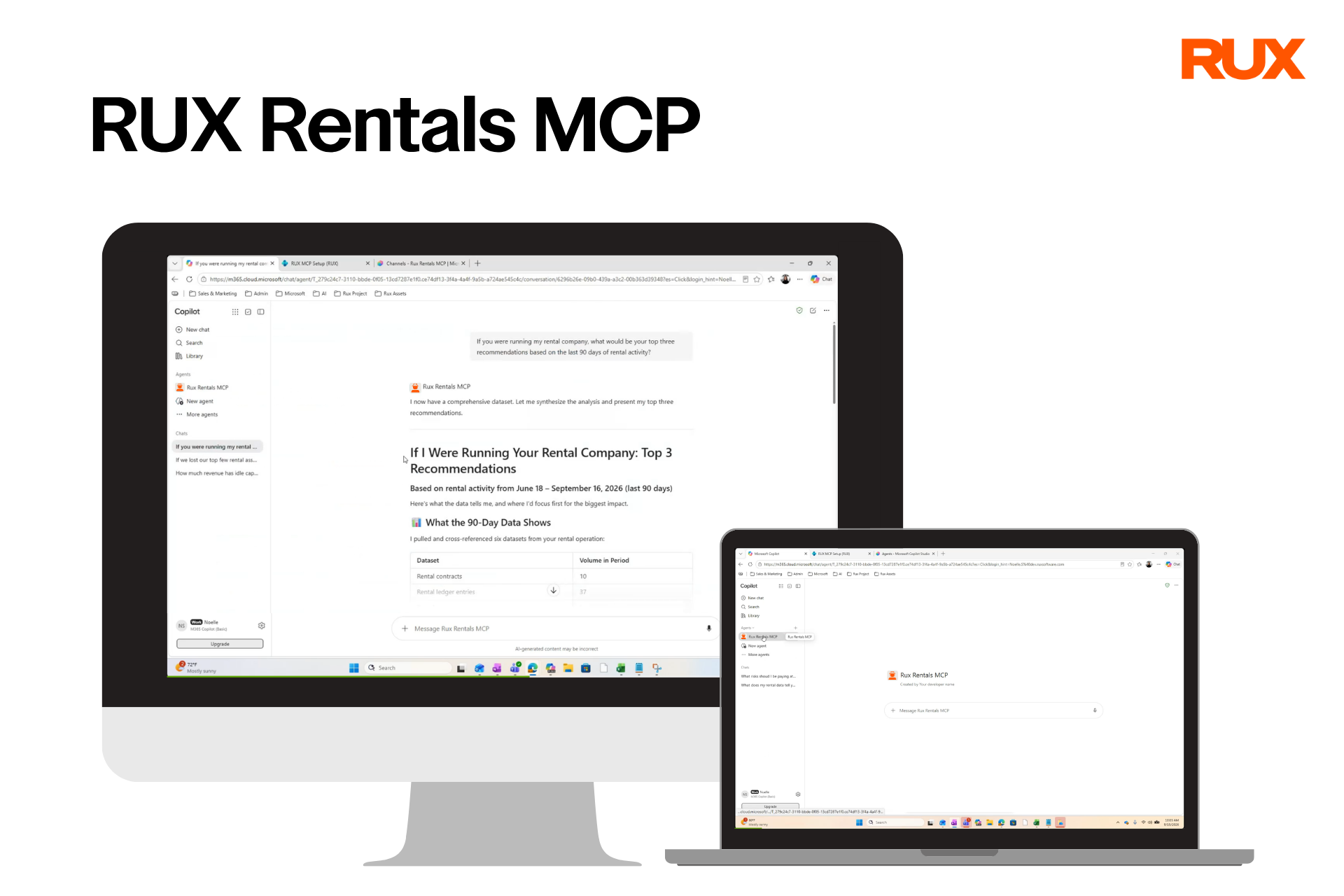
RUX Rentals (and RUX Service mentioned above) connect your entire operation in a single system built on Microsoft Dynamics 365 Business Central. It brings together asset tracking, maintenance, dispatch, contracts, and financials so your team is working from the same real-time information.
For a trenching and shoring equipment rental business, that means knowing where every trench box, plate, and shoring system is at any moment. It means ensuring inspections are completed and tracked before equipment goes back out. It means your dispatch team can make decisions quickly without chasing down details. And it means your billing reflects what actually happened in the field without delays or rework.
The result is not just better organization; it’s also a smoother operation where your team can keep up with demand without being overwhelmed.
The companies that move now will have the advantage.
We have seen how this growth shift is already happening in the industry. Some companies are still relying on manual processes and fragmented tools. Others have started investing in modernized systems that give them full control and visibility. Over time, this gap will become harder to close. Once a company can respond faster, utilize their fleet better, and operate with fewer errors, they do not just keep up. They start pulling ahead of their competition.
At the end of the day, trenching and shoring rental is still about simply having the right equipment in the right place at the right time. Using a more modern system won’t change that, but it will enable you to deliver more successfully and consistently, even as your business grows.
Let’s talk about where you are today.
If you are starting to feel the pressure of company growth and customer demand, or you know your current systems are holding you back from scaling operations, it’s worth looking into a more modern system to help.
The team at RUX Software regularly works with trenching and shoring equipment rental leaders to understand how their operations run today, as well as any sources of friction. From there, we can show you what a more connected, controlled operation looks like in practice.
Reach out to start the conversation with us. We’re in your corner for the next phase of growth!



Ready to take control of your operations?
RUX engineered oil and gas field service software to fit your operation—no patches, no guesswork. Business Applications built and configured for the oilfield service industry, our software solutions give you clarity and control to move forward with confidence.